
The best tractor for farming will vary based on your application; however, you need to consider your farmland’s size, type of farming, quality of soil, and implements required, as well as your workload and financial capability. You should compare performance parameters like engine functioning and incentives on horsepower when you are going to make the purchase of your tractor. It is equally important to choose a tractor dealer for a specific tractor model who is an authorised supplier of the tractor, because it will ensure you get parts, services, and proper support while the tractor is in use.
Create a Buying Plan
Before purchasing the best tractor for farming, you need to know the reason why you are purchasing the tractor. If you are going to use a tractor that works well for small farms, it may not be what is needed for a larger farm with operations on it. You should check for particular requirements based on the size of the place, your possible crop, and the type of soil you deal with.
Lightweight activities are very important in this selection process; for example, cultivation and transportation can give you better chances of ensuring that you use the tractor that meets your needs. Lower horsepower models may work well for applications that involve lighter duties, whereas models that operate with higher horsepower may offer the requisite power needed to perform heavy-duty jobs.
Instead of considering the tractor you want simply because the horsepower is high, use the engine horsepower that matches what you need. This will ensure that you can maintain operations in the most efficient manner and keep your costs down.
Look at the Fuel Efficiency and Engine Performance of Different Tractors
Buying a tractor is an investment, and the operating costs are considered as important as the purchase price. The amount spent on fuel depends on engine efficiency, engine workload, field conditions, and maintenance practices.
When selecting tractors, consider their overall engine performance instead of just focusing on one particular specification. Tractors that provide power and work efficiently will help the farmer manage operating costs in the long run. Ensuring regular maintenance is carried out and using the tractor in accordance with operating specifications will also maintain engine efficiency.
Consider Transmission and Driver Comfort Level
The type of transmission allows a tractor to transmit power for different tasks. Depending on the task you need to complete, your tractor may be required to operate smoothly at low speeds or have the right gear ratio for travel or heavy workloads.
It is also important to consider comfort. Farmers often spend long hours on tractors during periods of heavy agricultural activity, and having ergonomic seating and user-friendly controls may make work more comfortable.
Checking Hydraulics & Lifting Capacity
Hydraulic power is essential when using agricultural implements. To ensure the tractor can handle the implements you need for your requirements, you must ensure that its hydraulic lifting capacity is appropriate.
Setting the Right Budget for Your Tractor
The purchase cost of the tractor is only part of the entire ownership cost. You need to consider the cost of insurance, financing, registration, servicing, fuel, and tyre costs, among others, while budgeting for your tractor expense.
It is advisable to compare your tractor’s functionality and expected future operations against the budget you plan to set aside for it. Choosing a tractor that is less expensive, i.e., has a lower purchase price, may not actually be the best choice economically if this tractor is unsuitable for your farming needs. Similarly, paying for additional features that you will not need in your operations will only add unnecessary cost to your investment.
Reviewing India’s Tractor Manufacturers
The choice of manufacturer influences servicing options, product availability, spare parts availability, and many other areas affecting the ownership experience. When comparing tractor manufacturers in India, you should assess their range of products and whether they offer tractors appropriate for your agricultural requirements. Another consideration for farmers is whether there is a service centre nearby and whether spare parts are readily available for their tractor. Since tractors are operational machinery, maintenance can be critical at certain points in the growing season. Therefore, if farmers choose a manufacturer with a good support network, it will simplify the ownership experience.
Picking the Right Tractor Dealer
Choosing the right tractor dealer can be as critical as selecting the tractor itself. A dependable tractor dealership will be able to explain the specifications, funding possibilities, implements, warranties, and service requirements to the farmer before purchase.
When visiting a tractor dealer, you should ask about service options, scheduled maintenance, availability of spare parts, and warranty information for the tractor. It is more important to understand the complete purchasing procedure than to simply compare tractor prices.
Your tractor dealer should be transparent about its offerings and costs. You should read all of the fine print and ensure that you completely understand the terms before making a purchase.
Test Driving the Equipment
As much as possible, visit the dealer and test the tractor before making a final decision. Test driving will allow you to see how easy it is to operate the tractor’s controls and get a sense of seating comfort, steering, and handling.
Consider Long-Term Value
The best tractor for farming is not necessarily the one with the highest horsepower or the lowest price. Instead, it is the one that offers the best combination of performance, fuel efficiency, versatility, comfort, level of service, and overall cost of ownership for your specific application.
Thus, farmers must look beyond just the purchase price of the tractor and also consider its efficiency for many years to come. A tractor that can perform a wide variety of jobs on the farm will allow you to dramatically reduce downtime and future spending.
Frequently asked questions
Q. How much horsepower is needed for agricultural purposes?
It depends on the agricultural job being done and the implement being used. Light work requires less horsepower, while heavy cultivation practices require higher tractor horsepower.
Q. What do I need to check before choosing a tractor?
It is necessary to check the engine performance, horsepower, type of transmission, and hydraulics system, along with fuel usage, operator comfort, warranty, and maintenance of the tractor.
Q. How important is the tractor dealer?
It is essential, as a good tractor dealer can explain the products, demonstrate tractors, and guide you on financing, warranties, servicing, and spare parts.
Q. Should I consider only the cost of the tractor?
No, you should include the cost of usage in terms of fuel, service support, and total cost of ownership to arrive at the true economic cost of ownership, since a more expensive tractor at first may prove more economical in the long run.
Q. Why should I compare tractor manufacturers in India?
To help farmers determine which manufacturer offers the best product differentiation and service network, and who best suits their agricultural operation.
Q. Can a tractor be employed for various agricultural operations?
Yes, it can. Based on its specifications and the implements used, a tractor can perform many agricultural activities, such as tillage, sowing, and transporting.

Which Is the Best Selling Tractor in India Right Now?
Farming is very important to the economy of India and its importance cannot be overstated. It thus becomes very important to choose the right tractor, and Indo Farm offers reliable solutions for your farming work.

How Do I Choose Between 2 WD and 4 WD Tractors?
For Indian farmers, with different soil conditions and crops, it is essential to understand this difference. In this blog, Indo Farm – one of the leading tractor manufacturers in India – will help you find the tractor that’ll best serve your needs.

Best Tractor Brands in India to Buy This Year – Indo Farm Leads the Way
In agriculture in India, selecting from the best tractor brands in India is essential because reliability is not optional.

Indo Farm 4by4 Tractors in India | 4 Wheel Drive – 4WD Tractors
As a company with a history of technology and engineering excellence, Indo Farm is one of the best tractor brands in India, providing best in class solutions to for the modern-day farming industry.

How to Choose the Perfect Mini Tractor 16-30 HP for Your Farm
In today’s evolving agricultural landscape, small and mid-sized farmers are looking for compact, efficient and high-performance machines to maximize yield and minimize effort. This is where the Mini Tractor 16-30 HP range by Indo Farm proves to be a powerful companion.

Top Tractor Manufacturing Companies in India 2025
Innovation in machinery is driving the future of agriculture in India, and at the heart of this transformation are tractor manufacturing companies in India.
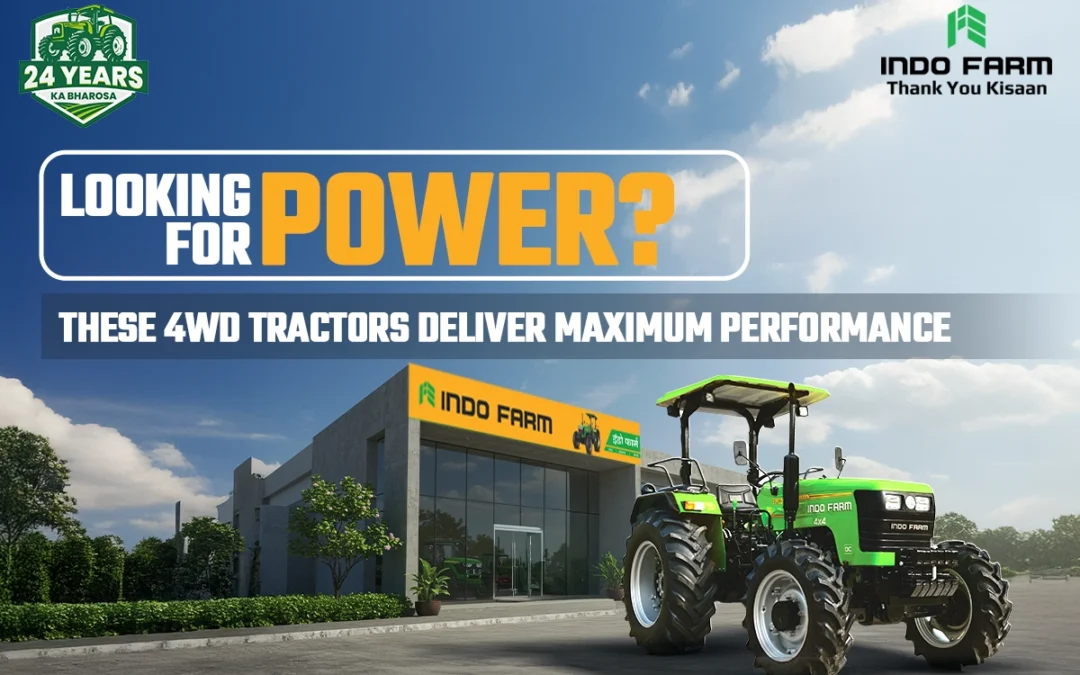
Looking for Power? These 4WD Tractors Deliver Maximum Performance
Modern farming needs strong and reliable machines. Farmers today need tractors that can work well on tough land and help them get more done efficiently. 4WD tractors do exactly this. Indo Farm is one of the top tractor makers in India that offers these powerful tractors.

India’s Best Tractors 2025: Ultimate Guide to the Top Brands Farmers Trust
At Indo Farm Equipment Limited, we manufacture high-performance tractors along with fuel-efficient models at affordable prices in 2025.

Top Tractors in India: A Comprehensive Guide for Farmers in 2025
In India, farming is a way of life, a legacy. India’s economy is driven in large part by agriculture and the need for the India’s best tractor continued to grow and thrive in 2025.

Follow these steps to get a better paddy harvest with India’s best tractor
India, thanks to its large rice production, considers paddy farming to be the foundation of its agriculture. Still, growing paddy can be tough due to issues such as the quality of the soil, controlling water and knowing how to harvest the crop properly.