
In the coming years, getting the proper agricultural equipment as a farmer will be one of your most important investments. Farmers are faced with decisions regarding the type of brands, models and horsepower. These are based on the tractor’s horsepower, economy, build quality, how comfortable operators will be using these machines and what type of customer support they can expect after the purchase. Agriculture is evolving in India. With the increased cost of labour, the growth in productivity expectations from agriculture and the growing trend of mechanisation across all states, tractors are now considered the most important type of machine being used for modern-day farming. In 2026, the question is no longer whether to invest in a tractor, it is which one to choose. There are many options available in the Indian tractor market from compact, low-horsepower tractors designed for small land owners to large, powerful, commercial tractors that have been designed to operate on large, commercial farms. In order to make an informed decision regarding the purchase, farmers must have adequate knowledge of what to look for and which models perform under real-world conditions. This blog provides an overview of the top ten best tractors in India for farming in 2026. Specific details about the tractors, including key features, appropriate types of farms that they are suited for and reasons why the investment should be made are presented in this blog. If you are looking to purchase an agricultural tractor for the first time or if you are looking to upgrade from your current piece of equipment, this is your source for information!
What to Look for in the Best Tractor in India 2026
Prior to looking at specific models of tractors, farmers should assess which will be considered core features for assessment in order to help choose the right tractor for their farming operations:
- Power and Fuel Efficiency – The right tractor will provide power and fuel efficiency. A tractor that has enough engine power providential towing capability will be a benefit while consuming less diesel consumption is a significant cost factor for all Indian farms regardless of size.
- Horsepower – Matching the frequency of horsepowerrequiredto perform on the farm will also have an influence with regards to the total cost of farm operations. A small farm or horticultural farm will generally require between 20-35 hp to effectively cover the smaller acreage while mixed crop farms generally operate with engines rated for between 35-55 horsepower. Farming operations requiring deep tillage will be able to utilise tractors that are rated for 55-75 hp.
- Gear Box and Transmission – Utilising a reliable gear box will provide for smooth transitions between all gears and as a result of-mitigate mechanical wear, promote extended life expectancy of traction engines and their intermediate components. This is particularly important for tractors used across intensive, multi-season farming operations where the transmission is under constant load.
- Hydraulic Systems – A highly capable hydraulic system is essential for the operation of heavy implements used by farmers. The efficiencies produced via hydraulic operation will improve the quality and consistency of farming operations across the field.
- Braking System – The type of braking system used and the geographic and operational regions in which farmers are farming will have some influence on which type of brake will be best suited for their specific farming operations. Oil immersed brakes typically offer better stopping power and longer life than dry brake systems.
- Operator Comfort-Farming is physically demanding work. A tractor with ergonomic controls, an adjustable seat, well-positioned levers and a flat operating platform allows farmers to work longer, more productively and with less fatigue, directly improving daily output.
- After-Sales Support-A great tractor purchase is only as good as the service network behind it. Access to genuine spare parts, trained technicians and responsive dealer support close to the farm minimises costly downtime during critical sowing and harvesting windows
Top 10 Tractors in India for Farming in 2026
- Best for Small Farms-TheCompact 20–25 HP Tractor
If you are growing 1-5 acres of crops on your farm, a compact 20-25 horsepower tractor will be the least expensive option available to you because they are light in weight and can easily manoeuvre around narrow crop rows or confined areas. Since most first-time tractor buyers do not have experience with operating tractors when they purchase one, these compact tractors are typically the easiest type to operate. The main components of compact tractors include an efficient single or dual cylinder engine, easy shifting from gear to gear and a compact structure allowing access to small plot spaces. The reduced maintenance costs associated with tractor make them attractive as well. These tractors are best for farming on small amounts of land.
- Best for Horticulture-The Narrow Track Tractor
The best tractor for horticulture is a narrow track tractor used for horticulture farming, as it has been designed specifically to navigate closely spaced plant rows while avoiding crop damage. The tractor typically has a narrow profile, tight turning radius and smooth power delivery, thereby providing high-precision fieldwork. Narrow track tractors are usually available in the 20-Hp to 35-Hp range and they can accommodate a wide range of horticulture-specific implements such as inter-row cultivators, spraying units and small front-end loaders. Operator comfort and ease of control are especially important for these tractors, as they require high-precision work. Narrow track tractors are best suited for use in the operations of vineyards, orchards, vegetable growing, floriculture and greenhouse operations.
- Best for Medium Farms-The 35–45 HP All-Rounder
The 35 to 45 Hp tractor segment is the most common size of tractor purchased by Indian farmers for a number of reasons. This tractor size offers a good balance of power, fuel efficiency, room for implements and cost for farmers who work between 5 acres and 15 acres of land. The ideal tractor in this size range will have a constant mesh gearbox to provide smooth and durable engagement of gears, a hydraulic system to control implements and power steering to make it easier to operate for long working days. The addition of dual clutches to allow smooth gear shifting when working with PTO-connected implements increases versatility for farmers often operating multiple implements. Farmers using this size of tractor will typically work in medium-size farms, wheat and paddy production, mixed crop production types and general field operation.
- Best for Paddy Farming-The Puddling Specialist
Paddy cultivation imposes specific needs on tractors operated in water-filled and mud field conditions. You will need tractors with excellent traction, high low-end torque and a braking system able to handle wet and slippery surfaces. Oil-immersed brakes are preferred due to the amount of stopping power they provide through the oil cooling capability. The best tractors for puddling operations will have between 35 and 55 hp, with high back up torque and strong axle and transmission designs.
- Best for Hilly Terrain-The Gradient Performance Tractor
Farming on sloped terrain and hills provide challenges to flat-land tractors. You will need support with maintaining stability when operating on slope, a reliable braking support when descending a slope and a low-end torque support for pulling loads up hill. The specifications for tractors built to handle hilly uses will generally include oil-immersed brakes for stopping power on inclines, engines with high back-up torque specifically for holding or harnessing heavy loads up hill and a strong axle designed to maintain stability when operated on uneven surfaces.
- Best for Deep Tillage-The High Torque Performer
Deep tillage including subsoil ploughing, chisel ploughing, and deep disc harrowing is among the most demanding operations a farming tractor can perform. It requires sustained high torque at low engine speeds, a strong hydraulic system for implement depth control, and a gearbox that can handle prolonged heavy-load engagement without excessive wear. Tractors in the 50–75 HP range are generally best suited for deep tillage work. High back-up torque and the ability to maintain pulling power even when engine RPM drops under load is the single most important feature for farmers engaged in regular deep tillage operations across clay-heavy or compacted soils.
- Best for PTO Operations-The Implement Specialist
Many modern farming operations rely on Power Take-Off (PTO) driven implements such as reapers, balers, rotary tillers, post-hole diggers, sprayers, and more. A tractor intended for heavy PTO use must have a dual clutch system that allows seamless gear changes while the PTO continues operating, a reverse PTO for quick disengagement when equipment encounters field obstacles, and a DC valve for smooth and precise control of hydraulically operated equipment. Tractors with a well-calibrated PTO speed typically 540 RPM or 1000 RPM depending on the implement and a strong live PTO system are the best choice for farmers running a diverse implement roster across multiple crops and seasons.
- Best for Large Farms-The 55–75 HP Powerhouse
Large farms demand a tractor that can sustain high performance across long working days, handle multiple heavy implements, and cover significant acreage efficiently within each season. Tractors in the 55–75 HP range strike the right balance between power and fuel economy for large-scale Indian farming operations. Key features for this category include a high-performance multi-cylinder engine with strong torque characteristics, a high-capacity hydraulic lift for heavy implements and tipping trailers, enhanced speed settings for fast field-to-storage transportation, and power steering for reduced operator fatigue during extended operations.
- Best for Commercial Operations-The 75 HP+ Heavy Duty Tractor
For contract farmers, large agribusinesses, and commercial agricultural operations managing 25 acres or more, a high-horsepower tractor of 75 HP and above is the most appropriate investment. These machines are built for sustained heavy-duty operation across every crop cycle from deep subsoil preparation through to post-harvest haulage and transportation.
Engines in this category are typically multi-cylinder designs built for high continuous output, with robust transmission systems, strong four-wheel drive capability, and advanced hydraulic systems capable of handling the heaviest implements available. Durability, component quality, and the availability of dealer service support are especially critical considerations at this investment level.
- Best for Value-The Fuel-Efficient Mid-Range Tractor
Not every farmer needs the most powerful or the most feature-rich machine. For farmers prioritising value a tractor that delivers reliable performance, low fuel consumption, easy maintenance, and a long working life at a competitive price the mid-range 35–50 HP category offers some of the best options in the Indian market.
The ideal value tractor combines a fuel-efficient engine, a durable constant mesh gearbox, solid hydraulic performance, and a comfortable operating platform all at a price point that delivers a strong return on investment over its working life. Low cost of ownership, wide spare parts availability, and a strong dealer network are equally important factors in this segment.
What to Look for in a Trusted Tractor Brand
When searching for a tractor brand to purchase, you should consider several factors. First, you want to make sure the brand has a reliable reputation for consistently engineering high-quality products. Second, you’ll want to look for brands with strong ongoing research and development efforts. Third, you’ll want to find out what type of parts sourcing the company uses and fourth, you should evaluate whether the dealer network they use has available dealers who can provide quality support after you purchase your tractor. One company that delivers on all four of these points consistently is Indo Farm. They began producing tractors in 2000 and currently produces a full range of tractors from 20 HP through 110 HP in four separate series to support every farmer. Each Indo Farm tractor has been designed to be easy to operate, easy to maintain and provides excellent fuel economy. All components used to build an Indo Farm are sourced from top-tier OEMs.
Conclusion
When selecting between the top 10 tractors in India for 2026, determining the best tractor will be based upon understanding what requirements exist on your farm including land size, soil type as well as the types of crops being grown and equipment being utilised. If selected properly, having a good-quality tractor will be one of the greatest long-term investment for a farmer, providing income throughout multiple seasons for many years. If you are an Indian farmer looking for a well-engineered and dependable tractor that fits into multiple categories you should consider exploring Indo Farm’s offering of farming tractors. Indo Farm offers tractors from 20 HP up to 110 HP with an extensive dealer network across the country, along with an excellent research and development facility dedicated to producing quality agricultural equipment based upon farmer focused principles.
Frequently Asked Questions (FAQs)
Q1. Which is the best tractor for small farms in India 2026?
Compact tractors with 20 to 35 horsepower range are ideal tractors to consider for small farms. Light weight, fuel-efficient, user friendly and applicable for horticultural uses, vegetable production and orchard work are all important considerations with respect to selecting compact tractors. Indo Farm’s 1 Series are examples of this type of tractor providing reliability, easy maintenance and easy operation.
Q2. What horsepower tractor would I use for deep tillage?
A tractor in the 50 to 75 horsepower range is typically used for deep tillage. An important feature of tractors used for deep tillage is a high level of back-up torque. This means that the engine continues to pull at full power when the engine RPM drops below normal from being heavily loaded. Additionally, the tractor needs to have a strong hydraulic system with a high lift capacity so that accurate implement depth control can be maintained while performing deep tillage.
Q3. What advantages do oil-immersed brake systems have over dry brake systems?
Oil-immersed brake systems provide significantly more stopping power than dry brake systems as well as have longer life, due to the oil cooling process used when operating the brake system. Oil-immersed brakes are important for tractors used in paddy field puddling applications and in applications requiring tractors to haul heavy loads on hilly terrain. Brakes that provide consistent and reliable stopping capabilities are a must for safe operation of tractors being used under such conditions.
Q4. For tractors being used in PTO-powered farm operations, what is the most important feature?
For tractors being used in PTO operations, the dual clutch system is by far the most important feature. This allows the tractor operator to change gears while the PTO continues to run implements such as reapers, balers and rotary tillers. The dual clutch system works by allowing the tractor operator to engage and disengage the PTO from the engine quickly without having to stop the tractor. This feature enhances the versatility of farmers with varied size implement fleets by allowing them to change gears without stopping the tractor.
Q 5. Why should Indo Farm be the first tractor in India 2026?
Indo Farm has farming tractors from 20 to 110 HP across four different series which cover every type of farm and all farm operations. All Indo Farm Tractors are designed to be easy to maintain and operate while offering adequate fuel efficiency and using components purchased from major OEMs only. The company has a dedicated research and innovation centre and an increasing number of dealers across the country. This is the evidence that Indo Farm is an excellent option for farmers in India looking for the first tractor in India 2026.
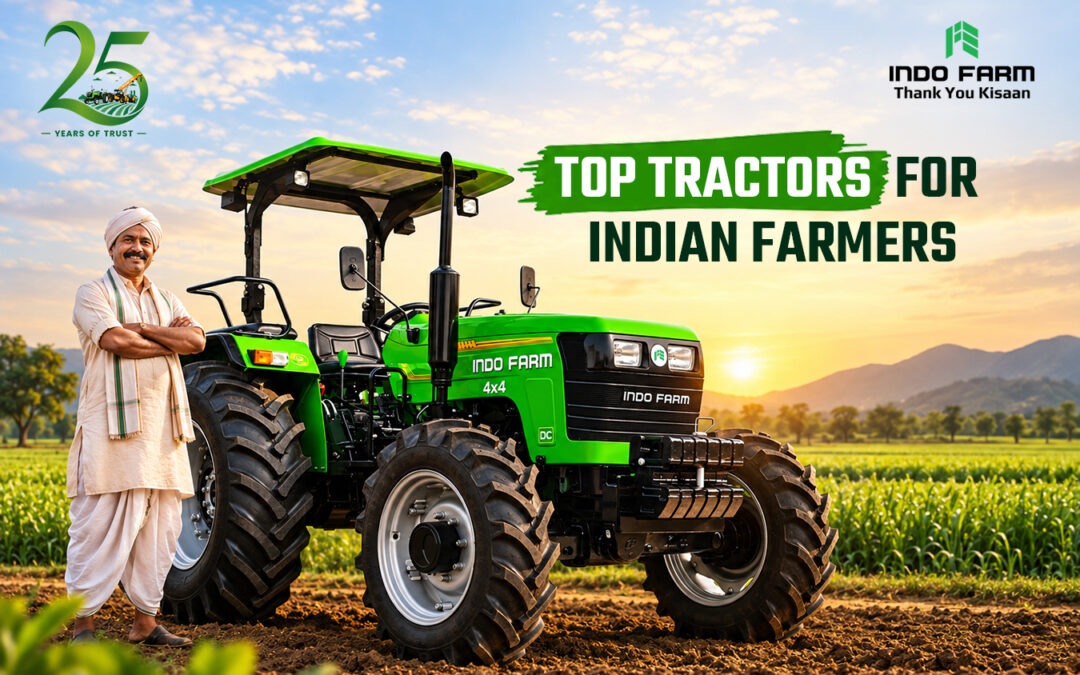
Which Tractor Is Best for Farming? Expert Comparison for Indian Farmers
The ideal best tractor for farming is the one that suits your farmland size, soil, crops, equipment demands and budget. There is no single tractor that is perfect for all Indian farmers. Choosing the right tractor depends on your agricultural operations and the efficiency, power, versatility and traction required. Farmers should compare horsepower, engine performance, transmission, hydraulics, fuel efficiency, implement compatibility and the advantages of a 4WD tractor in India before buying.
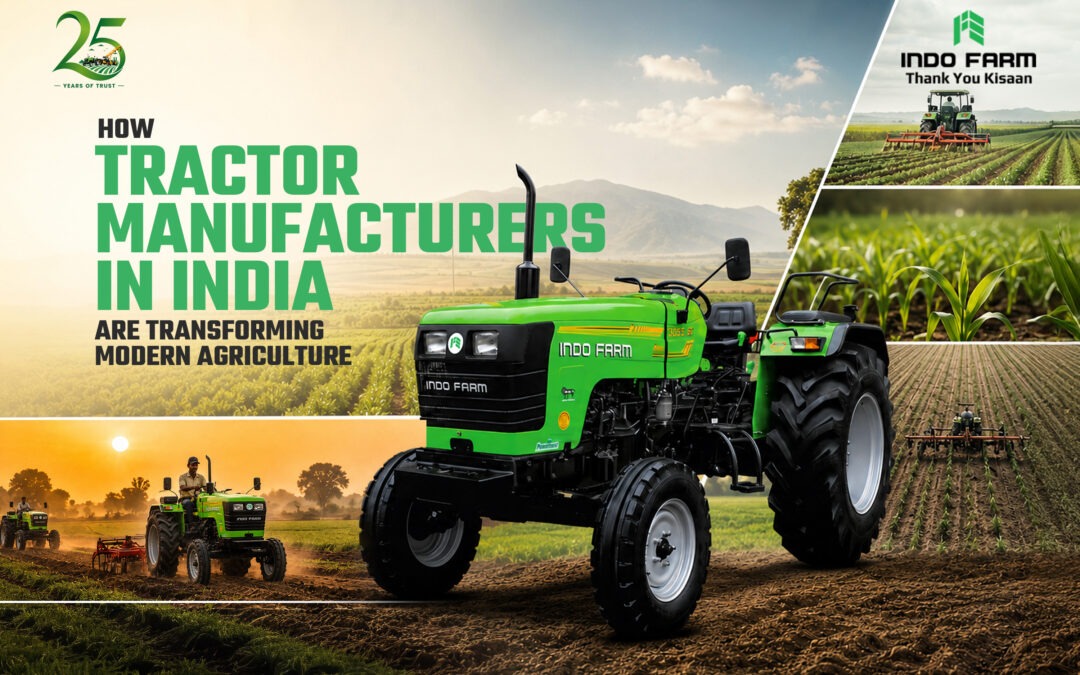
How Tractor Manufacturers in India Are Transforming Modern Agriculture
The role of tractor manufacturing companies in India has changed significantly due to the growing demand for better efficiency, productivity and versatility in farming. Tractors have become one of the most important aspects of agriculture, as they are widely used to improve the efficiency of activities such as tilling, ploughing, sowing, cultivation and transportation.
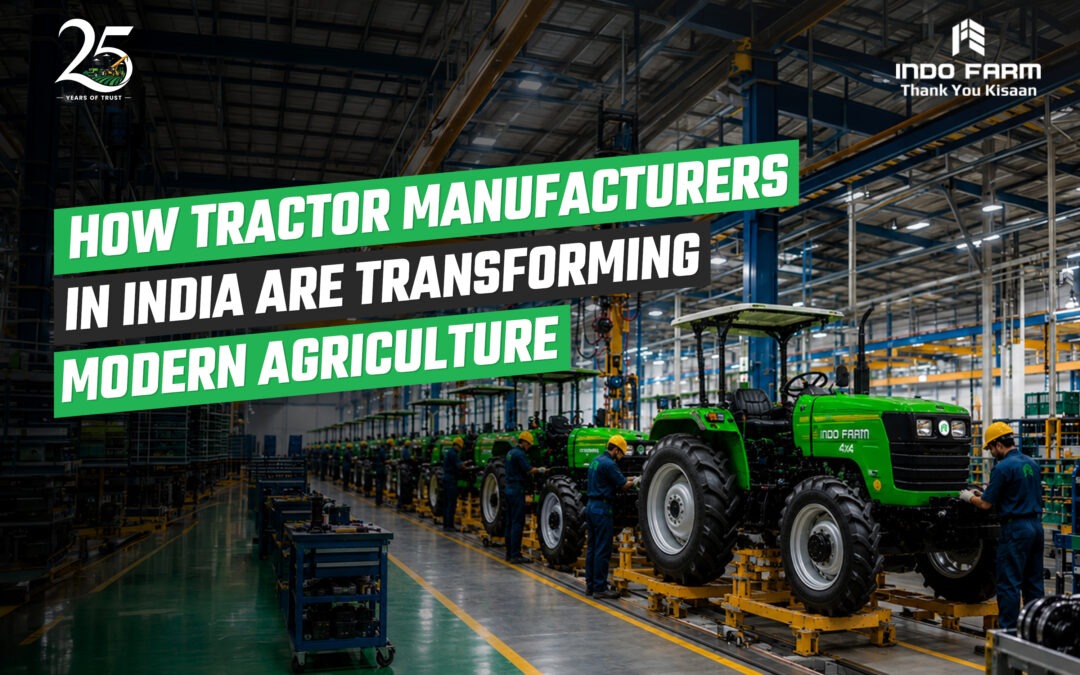
How Tractor Manufacturers in India Are Transforming Modern Agriculture
The role of tractor manufacturers in India has evolved significantly with the growing demand for greater efficiency, productivity and versatility in agriculture. Tractors have become an important part of modern farming, supporting activities such as tilling, ploughing, sowing, cultivation and transportation.
As farming practices continue to develop, manufacturers are focusing on producing tractors that can meet the diverse requirements of farmers. Indo Farm continues to develop tractors designed around the changing needs of modern agriculture, offering solutions for a range of farming applications.
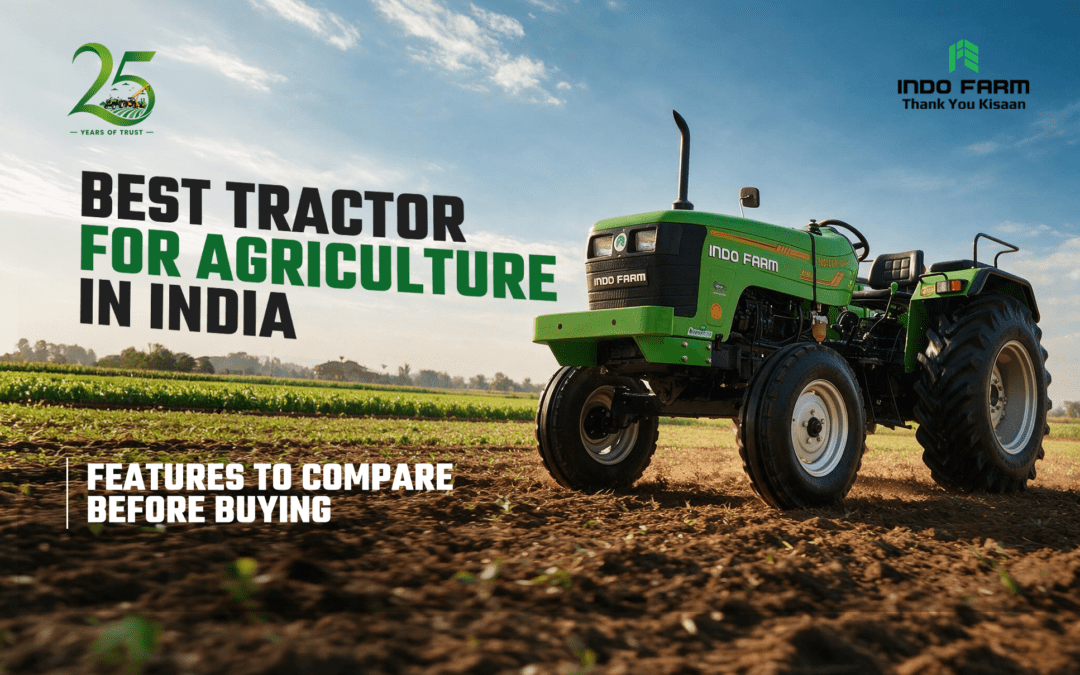
Best Tractor for Agriculture in India Features to Compare Before Buying
The best tractor for agriculture in India is one that fits the soil conditions, crop requirements, types of implements required and the amount of work done daily on the farm. The tractor needs to deliver the right level of efficiency, versatility, operating comfort and power to ensure maximum output. Indo Farm manufactures a variety of tractors suitable for different agricultural applications. Therefore, the features that matter most must be evaluated before buying.
Importance of Choosing the Right Agricultural Equipment Dealership
Finding a trustworthy agricultural equipment dealership involves assessing machinery quality, dealership reputation, product range, after-sales service and spare parts availability. Farmers should look for a dealership that offers reliable Agriculture and Farming Equipment, understands the local agricultural requirements and provides dependable support throughout the life of the equipment. A reliable dealership makes buying and maintaining farm equipment easier while ensuring farmers choose products that suit their land, crops and workload.
Why Buying from an Authorised Tractor Dealership Matters for Farmers
Farmers can expect to buy a quality tractor with an associated manufacturer warranty and timely servicing from authorised tractor dealers such as Indo Farm. Along with these advantages, authorised dealers can help farmers select the right model and maintain it properly.
How to Choose the Right Tractor Dealer in India: A Complete Buying Guide
A trustworthy dealer will sell genuine tractors. They will give you clear pricing, offer financing if you need it, provide warranty coverage, parts availability and reliable after-sales service. It’s a good idea for farmers to look into dealers before making their first tractor purchase and consider their reputation, available models, service area and knowledge about the local farming community.
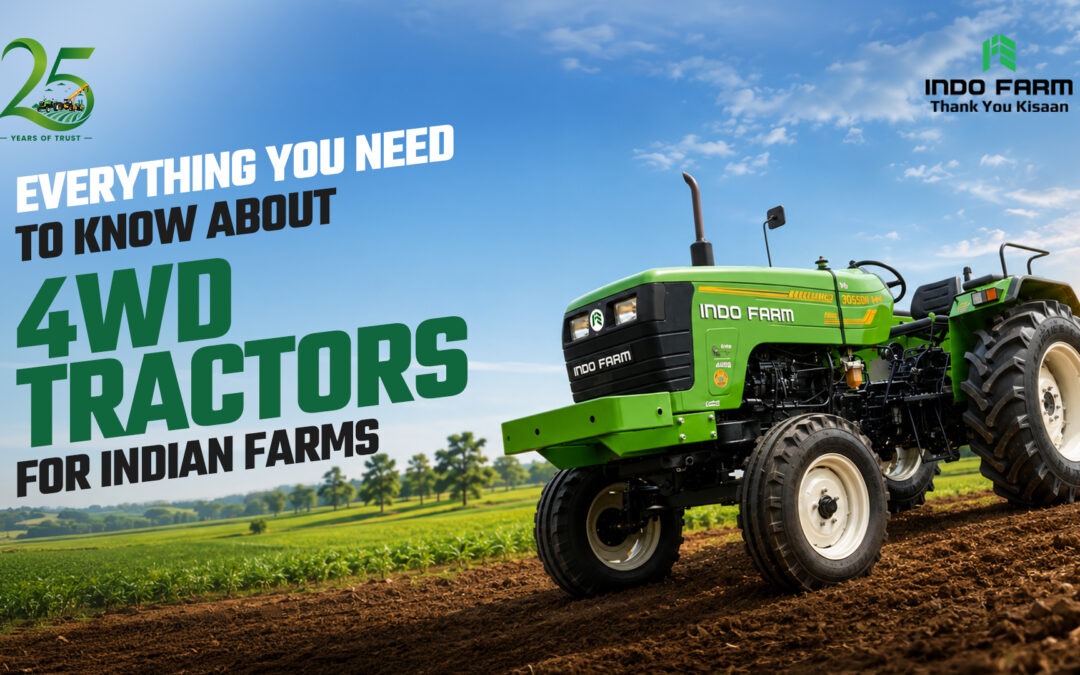
Everything You Need to Know About 4 Wheel Drive Tractors for Indian Farms
The design of a 4 wheel drive tractor allows it to run power to all four wheels, thereby increasing its traction, pulling capacity and performance on various agricultural lands. A 4 wheel drive tractor is very suitable for farmers who operate on rugged terrain, sloping ground, extensive agricultural fields and demanding agricultural operations. If a farmer wants to increase productivity, fuel savings and comfort, then using a tractor with four wheel drive at present is useful in modern Indian agriculture.
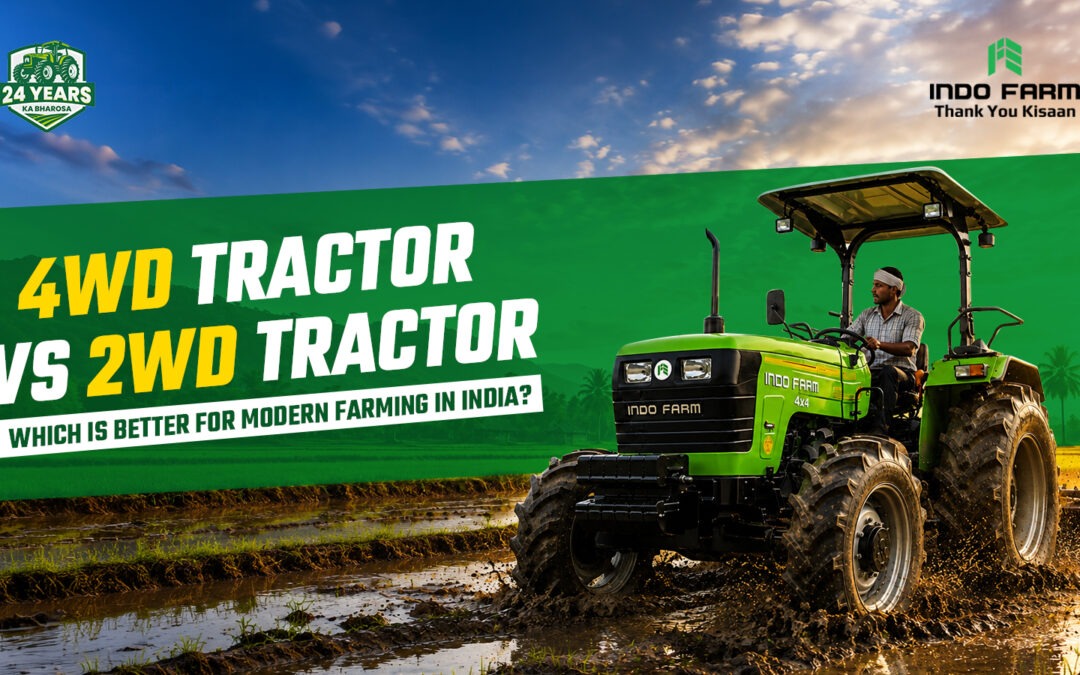
4WD Tractor vs 2WD Tractor: Which Is Better for Modern Farming in India?
4WD tractor in India is viewed as the best for new farms that require strong pulling and traction as well as adequate power. However, 2WD tractors are also functional in specific farming activities and in small-sized farms. The tractor suited for the farm depends on the area of land, type of farming done, and future farming objectives. Farming methods and practices in India have vastly improved with time. Mechanization has made the need for improving production and reducing labor paramount. The evolution of farming technology therefore makes choosing the right tractor of utmost importance.
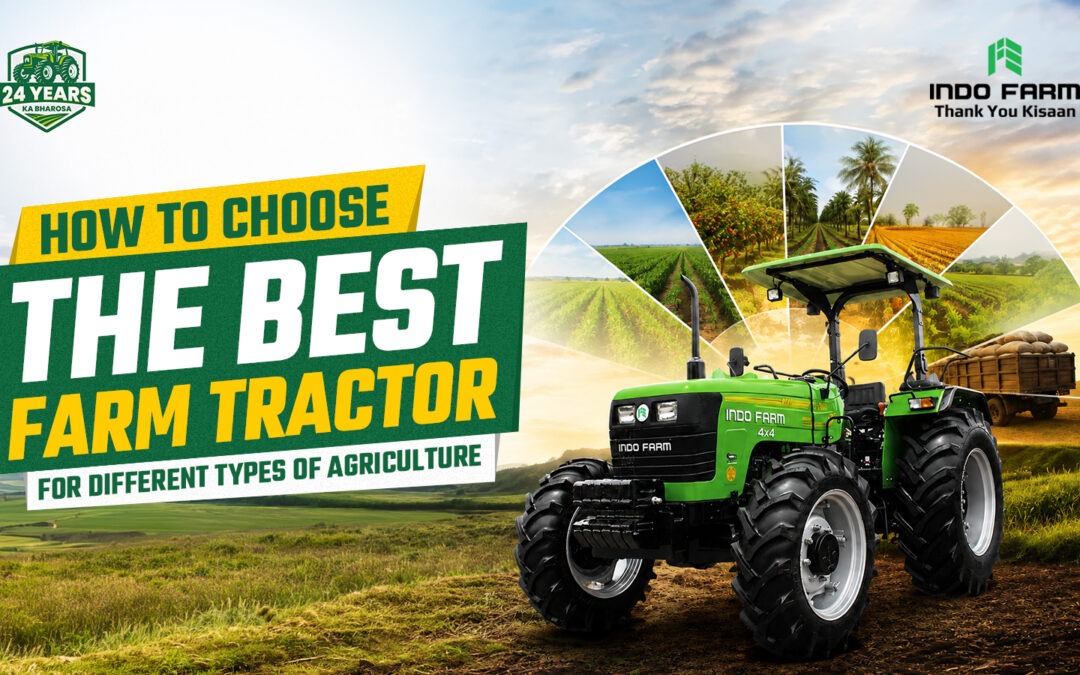
How to Choose the Best Farm Tractor for Different Types of Agriculture
Choosing the best farm tractor is not only about the area size of your farm but also the crop type, soil conditions and farming demands. Farmers should not settle for tractors with the highest powers but should instead look for tractors that provide a good combination of power, fuel consumption, durability and other important features.